[In]Visible: Irish Women Artists from the Archives by Catherine Sheridan at the National Gallery of Ireland

[In]Visible: Irish Women Artists from the Archives by Catherine Sheridan at the National Gallery of Ireland

Published: 11th February 2020

The National Gallery of Ireland holds important archives associated with the development of Irish Art.  The ESB Centre for the Study of Irish Art and the Yeats Archive contain rich collections relating to Irish women artists of the early twentieth century.

Focusing on various aspects of the life, education and work of artists including Mary Swanzy, Sarah Purser, Mainie Jellett and Elizabeth Corbet Yeats we explore important role women played in the development of modern art in Ireland.
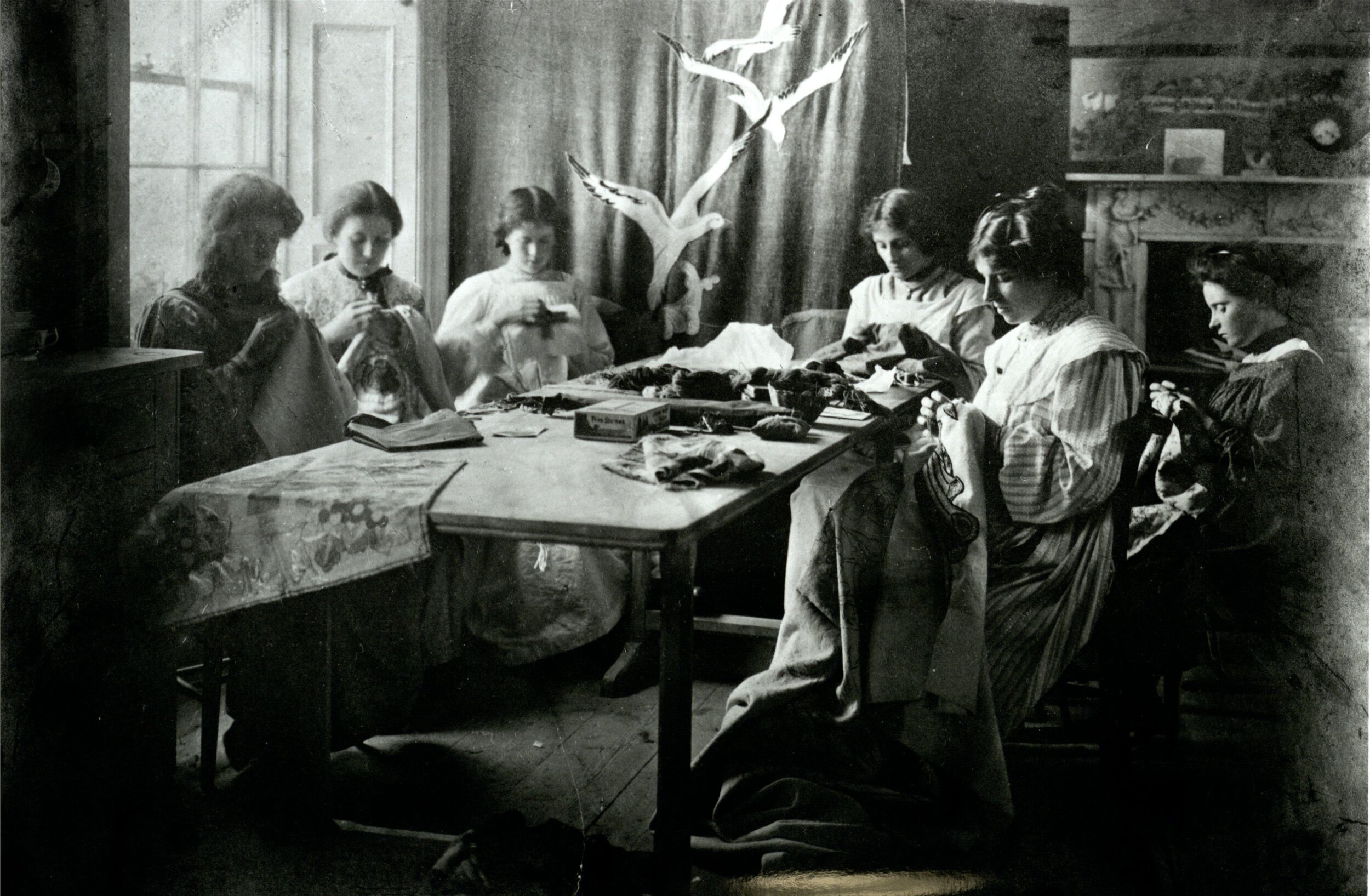
Dun Emer Industries embroidery room, Dundrum, Dublin, 1905.

Dun Emer Industries embroidery room, Dundrum, Dublin, 1905.

Family

In the early twentieth century, the majority of women studying or practising art in Ireland, shared similar social backgrounds. They came from a relatively privileged sector of Irish society, predominately upper middle class professional or mercantile families, where artistic pursuits formed part of their education.

Often rejecting contemporary social conventions, these women pursued their own goals as artists, educators and entrepreneurs. For such women their privileged social and financial backgrounds played a central part in facilitating their careers.
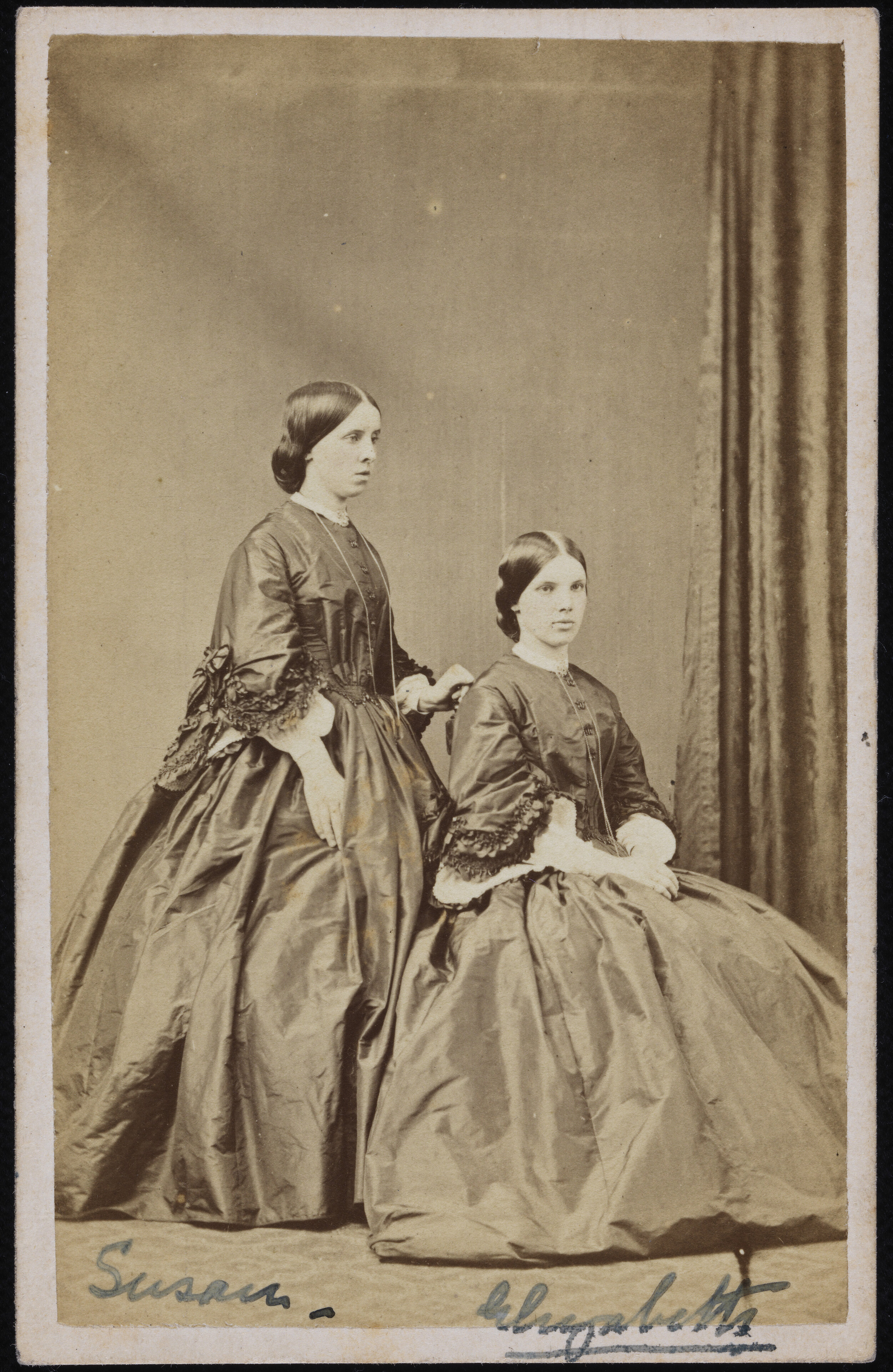
Susan Mary Yeats (neé Pollexfen) and Elizabeth Anne Pollexfen. Carte de visite, c. 1863.

Susan Mary Yeats (neé Pollexfen) and Elizabeth Anne Pollexfen. Carte de visite, c. 1863.

Elizabeth Corbet “Lolly” Yeats (1868 – 1940) educator, designer, and landscape painter. She trained as an art teacher as well as a printer, and was a member of designer William Morris’s circle in London before her family returned to Dublin in 1900. She was a founder member of the Dun Emer Guild and the first commercial printer in Ireland to work exclusively with hand presses.
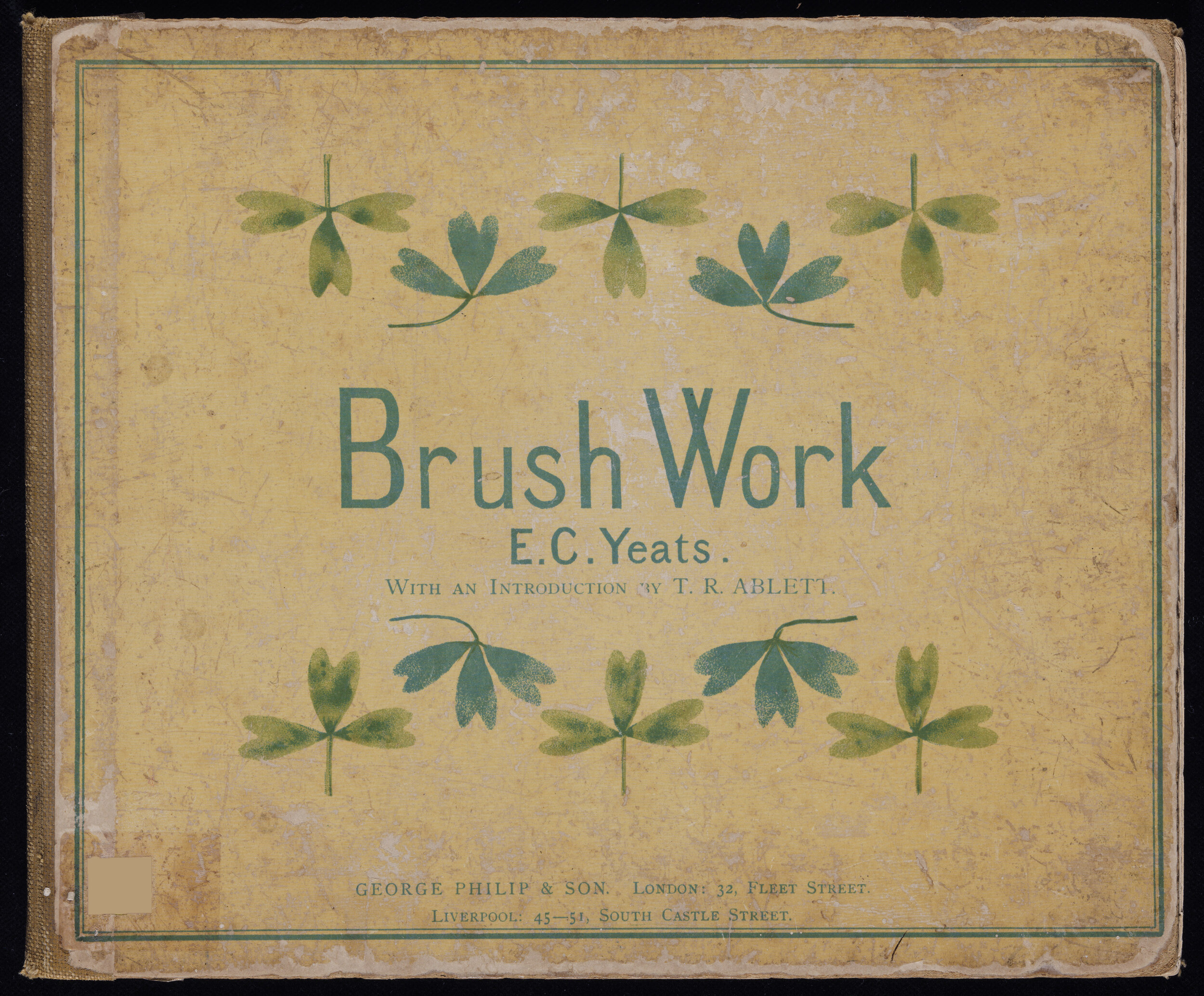
Elizabeth Corbet Yeats, Brush Work, London, 1896Watercolour manual for children to teach the technique of painting flowers and plants.

Elizabeth Corbet Yeats, Brush Work, London, 1896

Watercolour manual for children to teach the technique of painting flowers and plants.

Elizabeth Corbet Yeats, hand painted fan, 1905Watercolour on silk and engraved tortoiseshell.Features a decorative landscape superimposed by a design of pansies and crocuses, which frames woodland on the left and an inscription taken from the poem ‘…

Elizabeth Corbet Yeats, hand painted fan, 1905

Watercolour on silk and engraved tortoiseshell.

Features a decorative landscape superimposed by a design of pansies and crocuses, which frames woodland on the left and an inscription taken from the poem ‘Anashuya and Vijaya’ by William Butler Yeats.

Education

Women benefited from the gradual opening up of art institutions and increased access to formal art training in the latter half of the nineteenth century. The Royal Dublin Society, a precursor to the Dublin Metropolitan School of Art, admitted women from 1849. In 1893 women were permitted to attend the Royal Hibernian Academy (RHA) schools. Enrolment figures for the period from 1895 to 1905 highlight the number of students who attended the RHA schools with an average of six men and seventeen women during each academic year. Access to formal art education, in particular classes in life drawing and human anatomy, were essential for women’s artistic training.
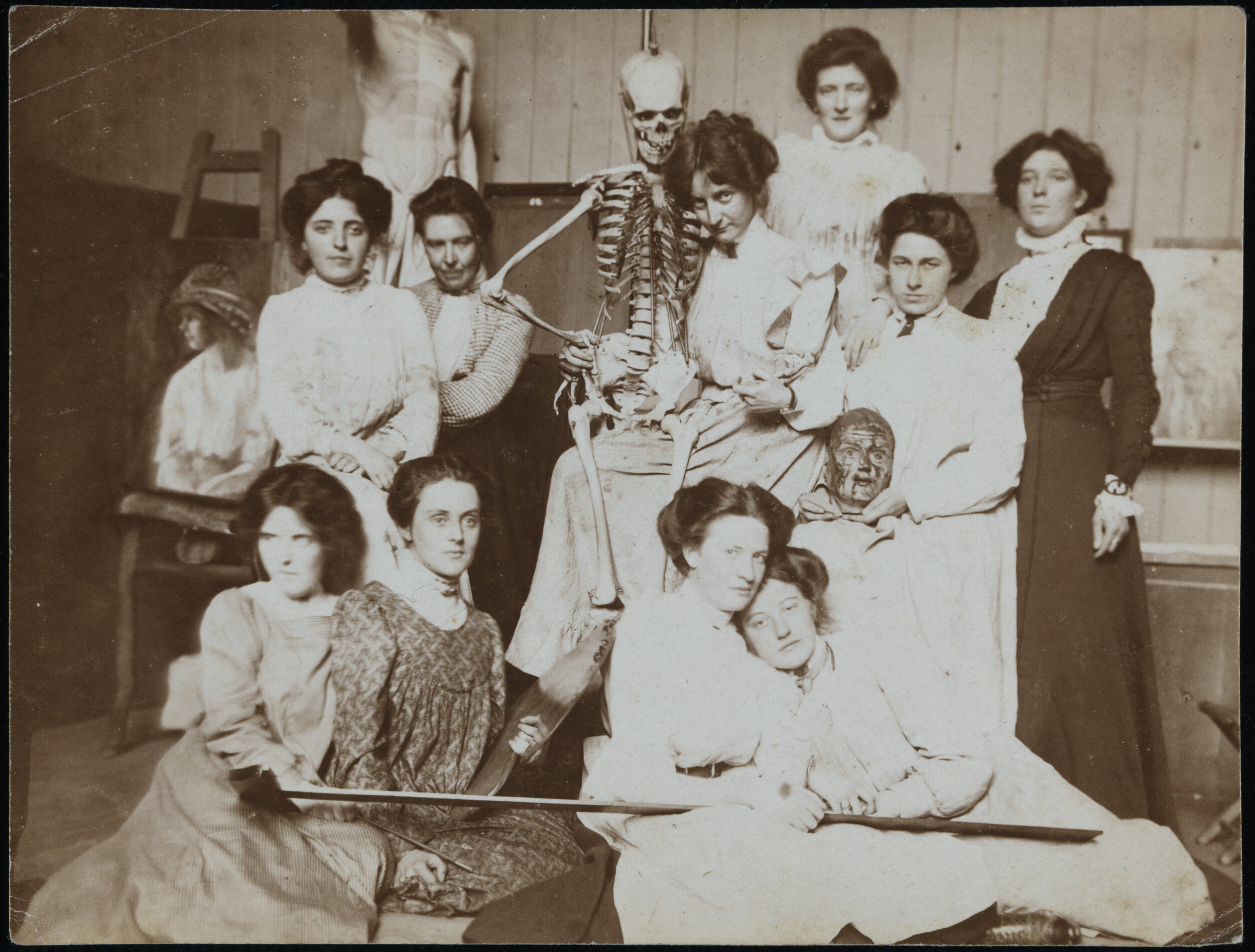
Female artists from the Dublin Metropolitan School of Art, c. 1910.

Female artists from the Dublin Metropolitan School of Art, c. 1910.

Helen Lillias Mitchell MRDS MRHA (1915-2000) founder of The Irish Guild of Weavers, Spinners, and Dyers, and of the Weaving Department of the National College of Art and Design. She was awarded an Honorary Life Member of the Royal Dublin Society in 1993 and elected an Honorary Member of the Royal Hibernian Academy in 1995.

Lillias Mitchell, Snowdrops, 1929.Watercolour on paper, painted at Elizabeth Yeats’s art class, when Mitchell was aged fourteen.

Lillias Mitchell, Snowdrops, 1929.

Watercolour on paper, painted at Elizabeth Yeats’s art class, when Mitchell was aged fourteen.

Travel

Women artists with the financial means often travelled abroad in order to continue their artistic training and to study new Modernist trends. Sarah Purser, Mainie Jellett, Evie Hone and Mary Swanzy all studied in Paris. Jellett and Hone studied non-representational art under André Lhote and Albert Gleizes. In 1923, Jellett brought back her first Cubist works to Dublin and she is recognised as one of the first artists to introduce abstract painting to Ireland. At the same time, Swanzy was creating and exhibiting figurative compositions that incorporated abstract elements associated with Cubism and Futurism.

Mainie Jellett, The Virgin of Éire, c.1940s.NGI4319. Oil on canvas.

Mainie Jellett, The Virgin of Éire, c.1940s.

NGI4319. Oil on canvas.

Mary Harriet "Mainie" Jellett (1897-1944) painter and early proponent of abstract art in Ireland. She studied at the Metropolitan School of Art in Dublin, the Westminster Technical Institute in London, and worked in Paris where she encountered Cubism.  She was a leading figure of the modern art movement and a co-founder of the Irish Exhibition of Living Art in 1943.

Postcard to from Mainie Jellett to ‘Miss H. Clarke’ [Margaret Clarke], 25 August 1937.

Postcard to from Mainie Jellett to ‘Miss H. Clarke’ [Margaret Clarke], 25 August 1937.

Mary Swanzy HRHA (1882-1978) was a landscape artist and one of Ireland’s first abstract painters. She painted in many styles reflecting her interests in cubism, fauvism, and orphism.  She studied at May Manning’s studio, the Metropolitan School of Art, as well as in Paris.  Independent wealth allowed her to travel extensively to develop her practice and in 1949 she was made an Honorary Member of the RHA. 

Mary Swanzy, painting palette.Painting palette last used in Mary Swanzy’s studio in Blackheath, London.

Mary Swanzy, painting palette.

Painting palette last used in Mary Swanzy’s studio in Blackheath, London.

Arts & Crafts

In 1902 Evelyn Gleeson, Elizabeth Corbet Yeats and Susan Yeats founded the Dun Emer Guild. This Irish female craft cooperative was based on the ideals and aesthetics of the English Arts and Crafts movement and the Irish Cultural Revival. The Guild, which was run by women and only employed women, specialised in printing, book binding, weaving and embroidery. It would later split and become the Dun Emer Guild, under Gleeson and Dun Emer Industries, overseen by the Yeats sisters. While her sister ran Dun Emer Press, Susan Yeats was responsible for the embroidery workshop which designed and produced ecclesiastical textiles such as church banners, vestments and altar cloths. In 1904 the cooperative gained international exposure at the Arts and Crafts Society Exhibition in St Louis, Missouri, where they exhibited needle work, cushions, and portieres made from Irish linen, wool and silk thread.

Susan Mary "Lily" Yeats (1866-1949) embroiderer associated with the Celtic Revival. She studied and taught embroidery in the style propounded by William Morris, working under his daughter May in London. She was a founder member of the Dun Emer Guild and in 1908 established the embroidery department of Cuala Industries, with which she was involved until its dissolution in 1931.

Lily Yeats, embroidered cushion cover, silk thread and wool embroidery on blue poplin, c.1902. (detail)

Lily Yeats, embroidered cushion cover, silk thread and wool embroidery on blue poplin, c.1902. (detail)

Exhibitions

A number of women artists were active in the establishment of art societies and exhibitions that enabled them and their peers to showcase their work. One of the most influential of these was the Society of Dublin Painters, founded in 1920. The Society aimed to provide an alternative public exhibition space to the RHA due to the Academy’s continual resistance towards the display of modern Irish art. In 1923, Mainie Jellett exhibited Decoration (NGI.1326), one of her earliest Cubist works, at a Society exhibition. The painting was greeted with general antagonism by the art establishment, the influential critic George Russell describing it as ‘a late victim to Cubism in some sub-section of this artistic malaria’. Jellett continued to champion Modernism in Irish art and in 1943 she was a co-founding member of the Irish Exhibition of Living Art, one of the most significant exhibitions of contemporary Irish art until the 1970s.  

Mainie Jellett, Decoration, 1923.NGI.1326. Tempera on wood panel.

Mainie Jellett, Decoration, 1923.

NGI.1326. Tempera on wood panel.

Sarah Purser HRHA (1848-1943) portraitist and stained glass artist.  She studied at the Metropolitan School of Art and in Paris and exhibited in the RHA throughout her life.  She financed An Túr Gloine (The Tower of Glass), a stained glass cooperative and was extremely active in the Dublin art world.  She was on the Board of the National Gallery of Ireland from 1914 to 1943.

Members of the Board of Governors and Guardians of the National Gallery of Ireland, Sarah Purser seated, Brinsley McNamara, Registrar, standing and Dermod O’Brien, seated, on right, photograph, c.1925-1935.

Members of the Board of Governors and Guardians of the National Gallery of Ireland, Sarah Purser seated, Brinsley McNamara, Registrar, standing and Dermod O’Brien, seated, on right, photograph, c.1925-1935.

An Túr Gloine

As both artists and entrepreneurs, women made significant contributions to the development of art cooperatives in Ireland. These focused on the professionalization of design and craft disciplines such as stained glass, embroidery, tapestry, and letter press printing. In 1903, Sarah Purser established the cooperative An Túr Gloine (The Tower of Glass) to train Irish artists in stained glass which they produced for Irish churches, schools, and convents. Among those to benefit from this initiative were Evie Hone, Wilhelmina Geddes, and Catherine O’Brien. An Túr Gloine sought to improve stained glass production in Ireland and provide an alternative to importing commercially produced stained glass from abroad. The cooperative gained international success receiving commissions in Europe, Canada, and America.

An Túr Gloine stained glass studio, photograph, c.1904.

An Túr Gloine stained glass studio, photograph, c.1904.

Dun Emer Press

Elizabeth Corbet Yeats managed the Dun Emer Press with her brother William Butler Yeats as editor. Printing began in 1903 and the press concentrated on publishing new Irish literature, often by writers associated with the Irish Literary Revival. It also produced an illustrated monthly series of Broadsides between 1908 and 1915. Edited by Corbet Yeats’s younger brother, Jack B. Yeats, the eighty-four issues include two hundred and fifty-two hand coloured illustrations.
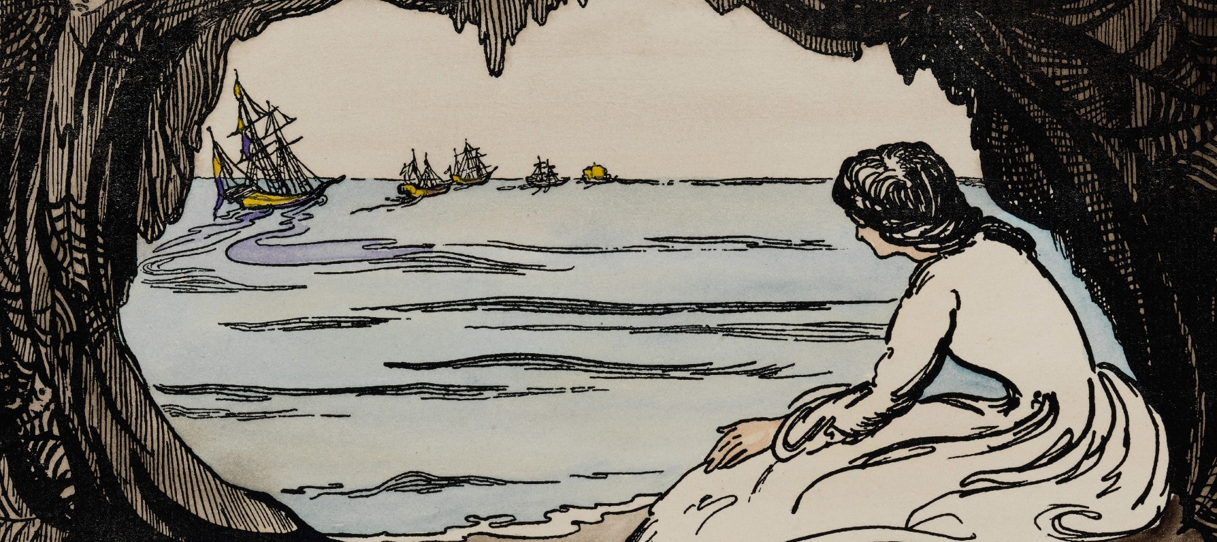
The cobweb cloak of Time has dropped between the world and me, The Rainbow ships of memory have drifted out to sea. P.C.S.Pamela Colman Smith (Broadsheet 7, July 1902)

The cobweb cloak of Time has dropped between the world and me,
The Rainbow ships of memory have drifted out to sea.
P.C.S.

Pamela Colman Smith (Broadsheet 7, July 1902)

Recognition

Art critics, commentators and administrators did not always recognise women artists in the same way as their male counterparts. In a 1922 article in the Irish Independent Thomas MacGreevy, later appointed Director of the National Gallery of Ireland, observed that within the Royal Hibernian Academy (RHA), some of the members ‘apparently only titter at the idea of a woman artist’. In 1924, over one hundred years after its establishment, the RHA elected Sarah Purser as its first female member. She was followed three years later by Margaret Clarke. Despite such challenges and low visibility, women played a key role in the development of modern art and the decorative arts in Ireland.


[In]Visible: Irish Women Artists from the Archives

National Gallery of Ireland

19 July – 3 March 2019
Curators
Leah Benson, Emma O’Toole and Tanya Keyes, Library & Archives, National Gallery of Ireland

For further information on our Library and Archive collections go to: https://www.nationalgallery.ie/what-we-do/library-and-archives

Reading room open Monday to Friday 10am – 5pm.

Story edited by Catherine Sheridan


Making Her Mark by Anna Liesching at the Ulster Museum

© National Museums NI

© National Museums NI

Published: 10th February 2020

Making Her Mark, an exhibition at the Ulster Museum, recognises the impact of women artists on the history of printmaking. It explores how they used the art form to expand their practice, gain financial independence and bring their art to a wider public. The exhibition opened in October 2018 and closed 20th October 2019. https://www.nmni.com/whats-on/making-her-mark
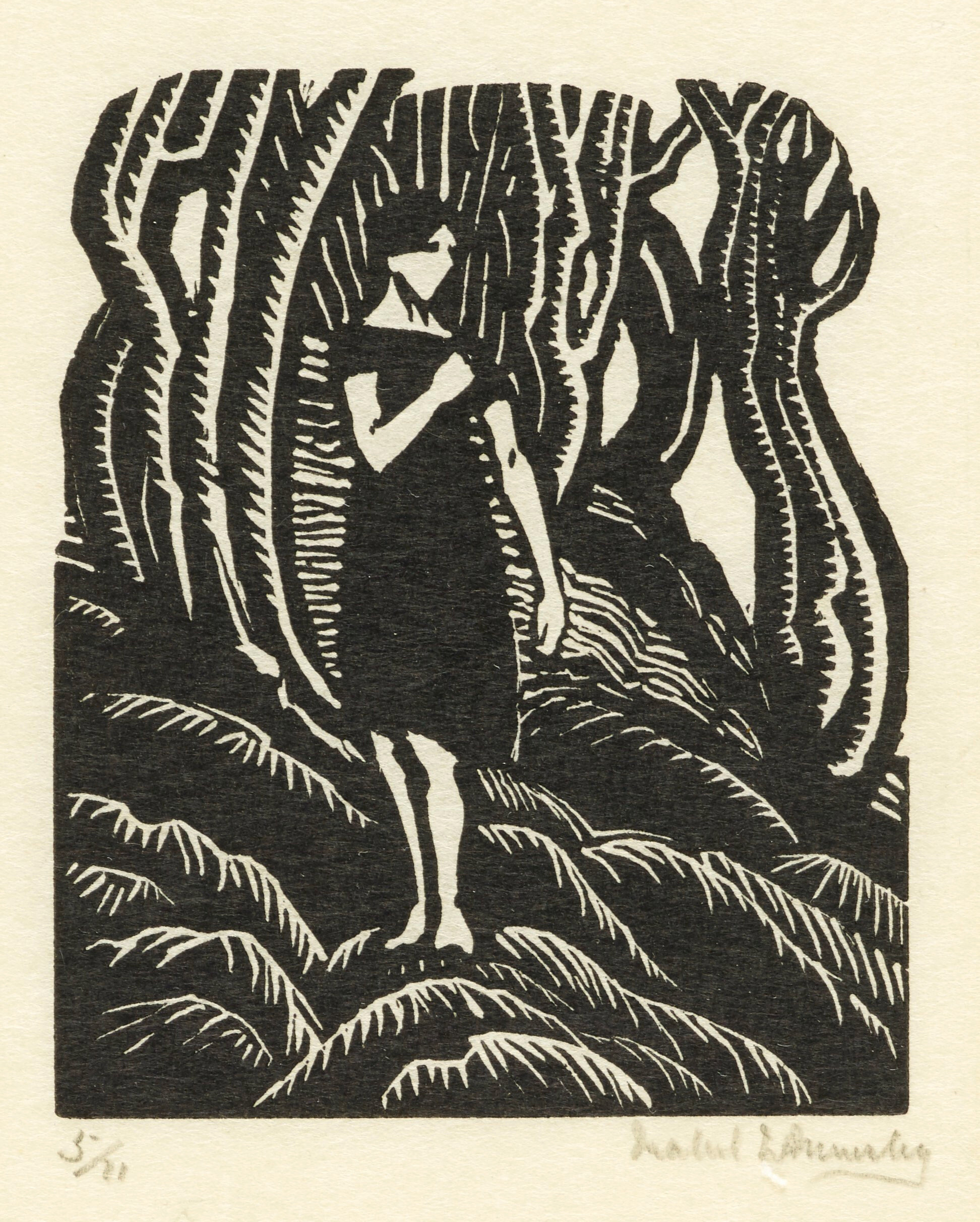
Lady Mabel Annesley (1881–1959) The Lake (Frontispiece to County Down Songs) c. 1925 Wood-engraving BELUM. Pt93 © With the kind permission of the descendants of Lady Mabel Annesley

Lady Mabel Annesley (1881–1959) The Lake (Frontispiece to County Down Songs) c. 1925 Wood-engraving BELUM. Pt93 © With the kind permission of the descendants of Lady Mabel Annesley

The exhibition includes 22 women artists covering nearly 200 years of print making; working across wood-engraving, lithograph, etching and screen-print. Some worked exclusively in the practice, many used the technique to promote women’s liberation and social issues and others simply used it as another means of expression. There are multiple Irish women in the exhibition, or artists who had a connection to Ireland.

Lady Mabel Annesley (1881-1959) I’m O’er Young (illustration for Robert Burns’ Poems) c. 1925. Wood-engraving BELUM.Pt86 © With the kind permission of the descendants of Lady Mabel Annesley

Lady Mabel Annesley (1881-1959) I’m O’er Young (illustration for Robert Burns’ Poems) c. 1925. Wood-engraving BELUM.Pt86 © With the kind permission of the descendants of Lady Mabel Annesley

Lady Mabel Annesley (1881-1959) was at the centre of the wood-engraving revival of the 1920s and 30s in Ireland. As well as practising herself, she championed her fellow wood-engravers. We can thank Annesley for many of the works in this exhibition; she gifted 100 wood-engravings to what is now the Ulster Museum in 1939.

Lady Mabel Annesley (1881–1959) Flax Dam c. 1939 Wood-engraving BELUM.Pt92 © With the kind permission of the descendants of Lady Mabel Annesley

Lady Mabel Annesley (1881–1959) Flax Dam c. 1939 Wood-engraving BELUM.Pt92 © With the kind permission of the descendants of Lady Mabel Annesley

Annesley grew up in County Down on her family’s Castlewellan estate, which she inherited at thirty-three and saved from financial disaster. A keen artist from an early age, she trained at the Frank Calderon School of Animal Painting. Following her husband’s death in 1913, she studied wood-engraving under Noel Rooke at the Central School of Arts and Crafts.

Lady Mabel Annesley (1881–1959) Yon’s the Rare Jewl o’ a Wee Pig (Tailpiece for Apollo in Mourne) c. 1926. Wood-engraving BELUM.Pt390 © With the kind permission of the descendants of Lady Mabel Annesley

Lady Mabel Annesley (1881–1959) Yon’s the Rare Jewl o’ a Wee Pig (Tailpiece for Apollo in Mourne) c. 1926. Wood-engraving BELUM.Pt390 © With the kind permission of the descendants of Lady Mabel Annesley

Despite being a member of the Anglo-Irish aristocracy, the land and the working life of the Mourne Mountains was central to her work. As well as making many engravings of the area she illustrated books on local traditions including Richard Rowley’s Apollo in Mourne and County Down Songs.

Doris Violet Blair (active 1940 -1980) Interior c. 1940 Etching BELUM.Pt232 © Estate of Doris Violet Blair

Doris Violet Blair (active 1940 -1980) Interior c. 1940 Etching BELUM.Pt232 © Estate of Doris Violet Blair

Doris Violet Blair (active 1940 -1980) is known for her work as an official war artist during the Second World War, recording women’s impact on the war effort in Belfast. This domestic scene, created during wartime, reminds us that while women took on more responsibility during the war they were often still expected to continue to be homemakers.

Margaret Clarke (1884 -1961) Irish Free State butter, eggs and bacon for our breakfasts (Commissioned by Empire Marketing Board (1926-1933) and printed for HM Stationery Office by Waterlow & Sons) c. 1930 Lithographic poster BELUM.Pt828 © Estate…

Margaret Clarke (1884 -1961) Irish Free State butter, eggs and bacon for our breakfasts (Commissioned by Empire Marketing Board (1926-1933) and printed for HM Stationery Office by Waterlow & Sons) c. 1930 Lithographic poster BELUM.Pt828 © Estate of Margaret Clarke

Margaret Clarke (1888 -1961) was the second woman to be elected as full academician to the Royal Hibernian Academy and received many awards, commissions and exhibitions. One of her most important commissions was for the Empire Marketing Board. Clarke’s posters were displayed in English towns to promote the idea that buying goods from Ireland further encouraged the Irish to buy from Britain.

Kate Greenaway (1846 -1901) Girl Spinning while a Fairy Appears on a Dove c. 1875 Ink drawing BELUM.U1194 © National Museums NI

Kate Greenaway (1846 -1901) Girl Spinning while a Fairy Appears on a Dove c. 1875 Ink drawing BELUM.U1194 © National Museums NI

Kate Greenaway (1846-1901) was inspired by characters she met growing up in London and these faces appear in her work as an adult. She started by designing Christmas and New Year cards, going on to illustrate books and eventually writing and illustrating her own in the 1870s. Her cards were the most successful designs sold by Northern Irish printing firm Marcus Ward.

Elizabeth Rivers (1903 -1964) Winter Skies 1960 Wood engraving BELUM.Pt762 © Estate of Elizabeth Rivers

Elizabeth Rivers (1903 -1964) Winter Skies 1960 Wood engraving BELUM.Pt762 © Estate of Elizabeth Rivers

English-born Elizabeth Rivers (1903 -1964) first came to Ireland in 1935, eventually settling here permanently. She exhibited widely throughout the 1940s and 1950s and was central to the rise of Modernism in Ireland.  One of her most successful publications, Stranger in Aran, which described her time living on the island, was published by Cuala Press (a later development of Dun Emer Press).

Elizabeth Rivers (1903 -1964) Saint Alone Mid 1900s Wood-engraving BELUM.Pt858 © Estate of Elizabeth Rivers

Elizabeth Rivers (1903 -1964) Saint Alone Mid 1900s Wood-engraving BELUM.Pt858 © Estate of Elizabeth Rivers

Rivers saw the disruption and violence of the Second World War echoed in Christopher Smart’s Rejoice in the Lamb, which he wrote when in Bedlam psychiatric hospital between 1756 and 1763. She used his manuscript to give titles to her engravings in one of her most famous works Out of Bedlam.

The niece of Lily Yeats, of Dun Emer Press, it is fitting that Anne Yeats (1919 - 2001) turned to print later in her career. She was a founding member, with Elizabeth Rivers, of the Graphic Studio Dublin, set up in 1960 to teach traditional printmaking skills and support artists. The studio is considered to have been at the forefront of Irish printmaking and gave Ireland an international reputation for the art.

Lady Elizabeth Thompson Butler (1846 -1933) A Despatch-Bearer, Egyptian Camel Corps 1888 Lithographic Poster BELUM.Pt1132© National Museums NI

Lady Elizabeth Thompson Butler (1846 -1933) A Despatch-Bearer, Egyptian Camel Corps 1888 Lithographic Poster BELUM.Pt1132© National Museums NI

Lady Elizabeth Thompson Butler (1846 -1933) produced this print for The Graphic, a magazine associated with social and political reform, where Butler was a staff artist.  Despite their titles and her husband, Sir William Francis Butler’s, rank in the military, they were both anti-imperialist and outspoken about the treatment of the Irish people during the famine, which Sir Butler witnessed as a child.

Ann Bailey (active 20th Century) Quai d’Anjou, Paris Early 1900s Etching BELUM.Pt500

Ann Bailey (active 20th Century) Quai d’Anjou, Paris Early 1900s Etching BELUM.Pt500

Very little is known about this work, or the artist – only that this etching was once exhibited at the Belfast School of Art, where Ann Bailey (active 20th Century) may have studied. While lack of information can be an issue with any artist, it is women artists who most frequently become ‘invisible’ in art history. Although in the last two hundred years over thirty percent of professional artists have been women, historically they have been excluded from academy and gallery systems, leading to their work being less often recorded and written about. When no information can be found on an artist it may mean that they did not pursue an artistic career. Throughout the 1800s and 1900s, as education opened up for women, many from privileged backgrounds attended classes, creating art for themselves and their friends.

Agnes Miller Parker (1895 -1980) The Challenge 1934 Wood-engraving BELUM.Pt13 © Estate of Agnes Miller Parker

Agnes Miller Parker (1895 -1980) The Challenge 1934 Wood-engraving BELUM.Pt13 © Estate of Agnes Miller Parker

For any further information please contact anna.liesching@nmni.com

Thanks to Anna Liesching of the Ulster Museum, the National Museums NI, and the copyright holders of the above images, for facilitating this photo essay.

(A)Dressing Our Hidden Truths by Alison Lowry at the National Museum of Ireland

(A)Dressing Our Hidden Truths by Alison Lowry at the National Museum of Ireland

Published: 10th February 2020

Slide 1.jpg

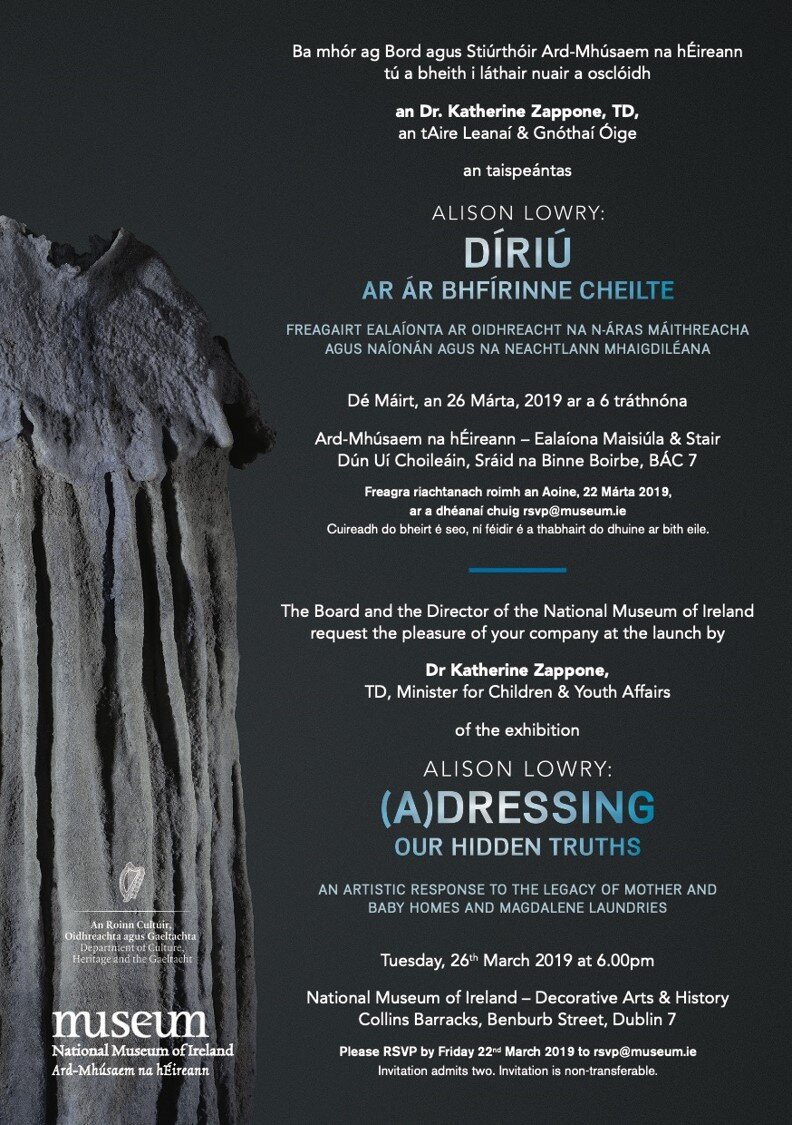
The exhibition (A)Dressing our Hidden Truths opened at The National Museum of Ireland in March 2019. It is the brainchild of curator Dr Audrey Whitty and artist Alison Lowry. The exhibition is an artistic response to the legacy of Magdalene Laundries and Mother and Baby Homes in Ireland.

Slide 2.jpg

The Magdalene Laundries operated in Ireland throughout the 18th and 19th centuries. It is estimated that 30,000 Irish women went through the laundry system in that time. To begin with the idea was to rescue and rehabilitate ‘fallen’ woman, but quickly the laundries became commercially driven and women and girls were committed to the laundries as ‘inmates’ for no real reason and used as free labour by the religious orders who ran them. The regime was harsh and unrelenting. On entering a laundry your name would have been changed, possessions removed and a uniform given. Women were expected to work long hours in awful conditions with very little food. Talking was forbidden and punishments were frequent.

Slide 3.jpg

The Irish State enabled the Magdalene laundries to continue running all those years. But in February 2013, Enda Kenny acknowledged this wrong and apologised publicly in the Dáil to all those affected. Here is an excerpt from his speech:

The Magdalene Women might have been told that they were washing away a wrong or a sin but we now know, to our shame, they were only ever scrubbing away our nation’s shadow. Today, just as the State accepts its direct involvement in the Magdalene Laundries, society too has its responsibility. I believe I speak for millions of Irish people all over the world when I say we put these women away for too many years because we put away our conscience. We swapped our personal scruples for a solid public apparatus that kept us in tune and in step with a sense of what was ‘proper behaviour’ or the ‘appropriate view’ according to a sort of moral code that was fostered at the time, particularly in the 1930s, 40s and 50s. We lived with the damaging idea that what was desirable and acceptable in the eyes of the Church and the State was the same thing and interchangeable. Therefore, I, as Taoiseach, on behalf of the State, the government and all our citizens deeply regret and apologise unreservedly to all those women for the hurt that was done to them and for any stigma they suffered, as a result of the time they spent in a Magdalene Laundry.

Slide 4.jpg

These are their names, Numbers 13:4.

The real names of the women, taken from the 1911 census, that were incarcerated in the Waterford laundry at the time

Reproduced with kind permission of ‘The Magdalene Names Project’ from JFM Research.

Slide 5.jpg

Punishments in the Laundry were frequent and cruel. Women and girls would have been held down whilst their hair was hacked off by the nuns or orderlies.

Slide 6.jpg

Since Irish Independence 10,000 women were forced into servitude in the Laundries. The last Laundry closed in 1996.

Here, 10,000 paper dolls spill out of church offertory plates. The paper dolls have been cut from (replica) £5 notes, that happen to bear the image of Catherine McAuley – the founder of the Religious Sisters of Mary.

Slide 7.jpg

A Nations Shame

Sheets embroidered with an inscription from the ‘Magdalene Seat’ at St Stephens Green in Dublin.

Slide 8.jpg

Connie Roberts, the author of ‘The Cardigan’, grew up in an Industrial School in Ireland. The industrial school system was heavily criticised in the Ryan Report in 2009.

Slide 9.jpg
Slide 10.jpg

Here we see Brigid Dolan’s admission form into the Bon Secours Mother and Baby Home, Tuam, Co Galway. These homes housed unwed mothers until they had delivered their babies. The babies were frequently adopted, often without any consent being given by their mothers.

Home Babies, 2017

There also includes an installation of 9 glass Christening Robes with audio, commemorating the 796 children ‘buried’ in a disused septic tank on the Tuam Mother and Baby Home site.

Slide 12.jpg

A New Skin, 2017

A sculptural piece that explores ‘rape culture’ in today’s society. Leatherwork by Úna Burke.

Slide 13.png

This collaborative video piece with artist Jayne Cherry is a performance work in which Cherry attempts to take 35 steps in heavy glass slippers to illustrate how hard it is for women to leave abusive relationships. It attempts to illustrate the statistic that on average a woman will be assaulted 35 times by her partner before she will call the police.

(A)Dressing Our Hidden Truths runs at the National Museum of Ireland until May 2020. For further information see here.

Thank you to the National Museum of Ireland, Alison Lowry and Brian Houlihan for facilitating the creation of this photo essay for Herstory.

Women and the Northern Ireland Peace Process

Women and the Northern Ireland Peace Process

Published: 12th September 2019

The Troubles – or the Northern Ireland conflict – was an ethno-nationalist conflict which began in the late 1960s and is generally accepted as having ended with the signing of the Good Friday Agreement in 1998. Fuelled by historical events, the conflict was largely political and sectarian with the main point of contention being the constitutional status of Northern Ireland. Unionists or loyalists – who were mostly Protestant – wanted to remain a part of the UK however the nationalists/republicans – who were mainly Catholic – sought a united Ireland. 3,532 people were killed during the conflict, with approximately 50,000 total casualties over the three decades. Women from all walks of life in Northern Ireland, in particular, played a vital role in the peace process and continued this cross-community dialogue long after the Good Friday Agreement was signed. They did everything from supporting victims of sectarian violence and victims’ families, to lobbying politicians and organising mass protests.  

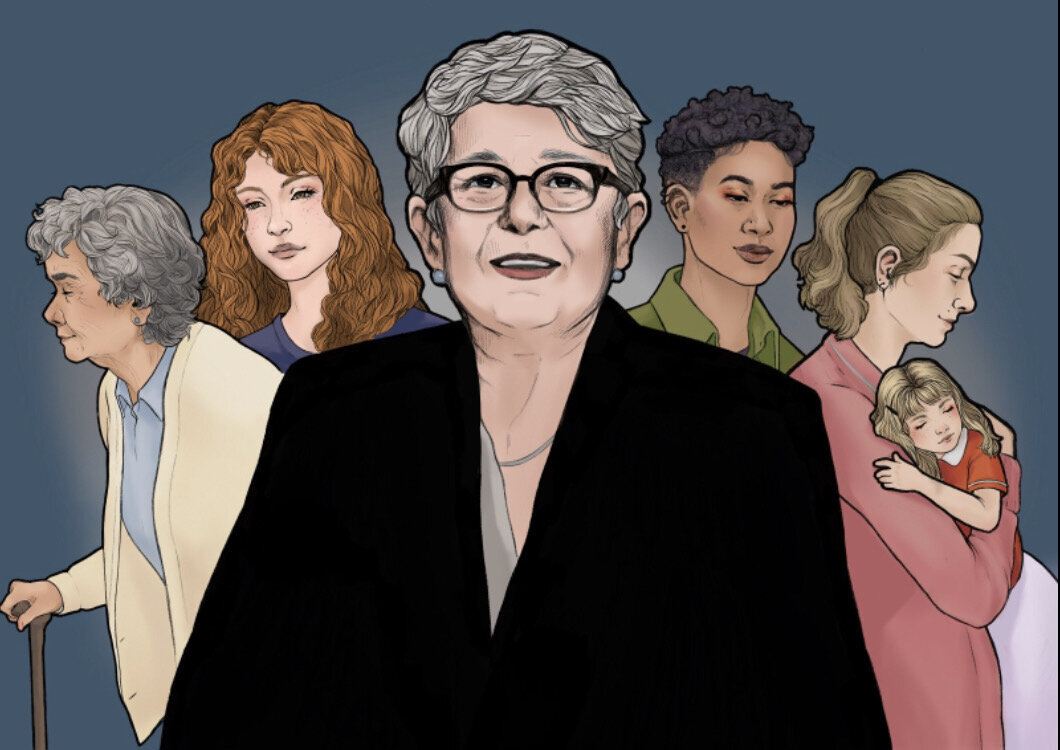
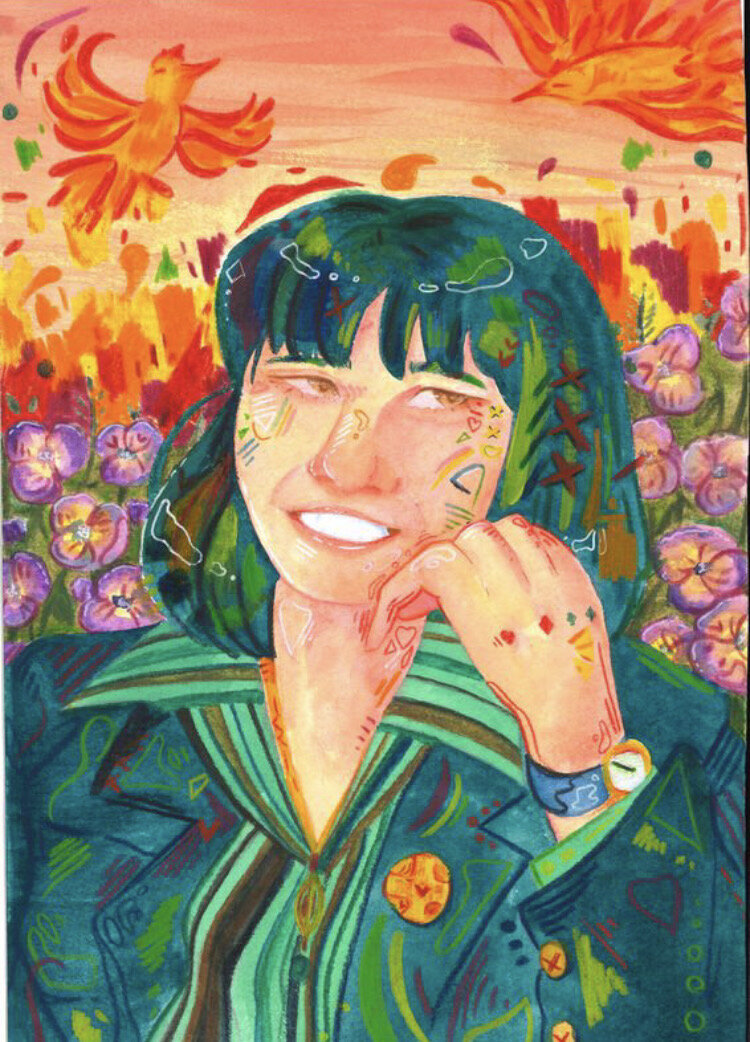
Isabella Tod by Victoria Subirats Figueras

Isabella Tod by Victoria Subirats Figueras

Women are ‘citizens of the state, inheritors with men of all the history which enobles a nation, guardians with men of all the best life of the nation; bound as much as men are bound to consider the good of the whole; and justified as much as men are justified in sharing the good of the whole.’ – Isabella Tod

From as far back as the 1860’s, women in the North of Ireland had been working together to assert their civil rights and challenge various laws that restricted their freedoms; issues regarding women’s education, married women’s property rights and voting rights. In 1872-3, Isabella Tod, a Scottish-born Presbyterian living in the North of Ireland since the 1850s, founded the North of Ireland Women’s Suffrage Society in order to campaign for a woman’s right to the parliamentary vote. Because Ireland was under British rule at the time, there was a certain collaborative effort on the part of women from both the north and south of the country, as well as with the women in England, Scotland and Wales, in their efforts to establish these common goals. This cooperative characteristic of the women’s movements continued into the 20th century with suffragism, trade unionism and eventually, the peace movement of the 1960s on.

‘Peace won’t be the end of the movement – more likely the beginning.’ – Monica Patterson

Perhaps the first women’s group to seek peace was Women Together, set up by Ruth Agnew, a Protestant, and Monica Patterson, a Catholic Englishwoman, in the autumn of 1970. It came from a meeting called ‘Women Together,’ organised by PACE (Protestant and Catholic Encounter), which encouraged women from trouble spots across Belfast ‘to discuss ways in which women could bring their influence to bear for better community relations.’ Local groups were set up across Northern Ireland and from then on, the members of Women Together were a constant on the streets stopping rowdyism and vandalism between gangs of youths and removing burnt out cars as well as publicly supporting peace and victims of intimidation.

‘There was a big risk in doing cross-community work. You were threatened but when you get a group of very strong women together who have a real aim in life, there’s very little that stops them, even a threat.’ – May Blood

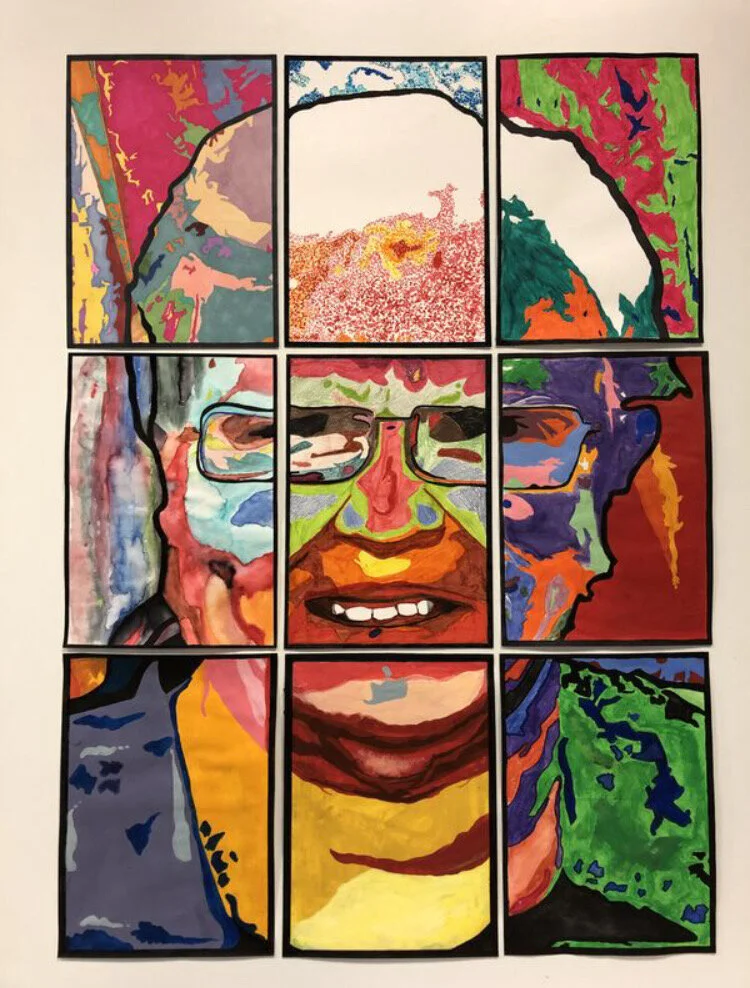
May Blood, groupwork by students at Hazelwood College, Belfast

May Blood, groupwork by students at Hazelwood College, Belfast

At the same time as Women Together were organising, so were women at a much more local level. May Blood, for example, became involved in voluntary work within her own housing estate. At a meeting of the residents – both Catholic and Protestant – they decided to put aside the constitutional issues and work together on issues that affected them all such as poor housing, low education attainment and high rates of teen pregnancy. Students, too, had a real role in the peace movement. Queen’s University Belfast elected their first female president of their SU in 1974, a woman named Bronagh Hinds, who had attended the Civil Rights march in Derry two years prior with her classmates. During her presidency she was a strong advocate for women and equal rights and went on to co-found the Northern Ireland Women’s Right’s Movement in 1975 where she advocated for consumer rights and single-parents families. Similarly, many women religious ‘organised creches, mum and toddler groups, pensioner lunches, cookery, beauty, dancing and a host of other classes that opened doors in the walls dividing the communities through which the women walked but which the men didn’t see.’ These women ‘worked to maintain some semblance of normality for the working-class communities that bore the brunt of the Troubles.’

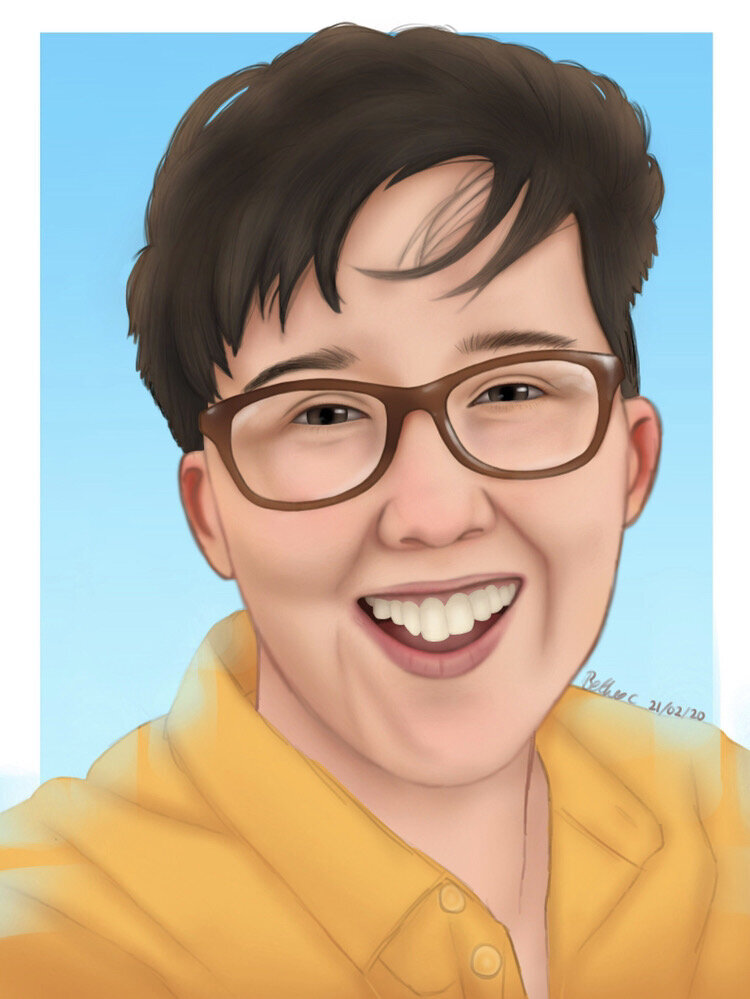
Bronagh Hinds by Emma Doran

Bronagh Hinds by Emma Doran

‘Fear is the main problem we have to cope with in our community but all it takes is just one person to say, ‘I won’t stand for this.’ – Eileen Semple

Derry Peace Women, 1972

Derry Peace Women, 1972

In Derry, five women from the Bogside and Creggan areas came together following Bloody Sunday in 1972 to campaign for peace. They had no specific title and were known simply as the ‘five Derry peace women.’ The Belfast Telegraph credited them with having ‘played an important part in the moves for an end to violence’ before the ceasefire of 29 May 1972, and stated that ‘without the women’s movement, Mr Whitelaw’s task of obtaining a ceasefire would have been impossible.’ The women moved throughout Ireland and Northern Ireland lobbying politicians, consulting military chiefs and ‘putting the cause of peace to militant republicans.’

Sunday News, 5 Sep 1976

Sunday News, 5 Sep 1976

‘This is not an organisation it is just a collection of mothers from the areas affected.’ – Betty Williams

In August 1976, Betty Williams helped to collect over 6,000 signatures on a petition for peace when she witnessed a car crash into a young family after the driver had been fatally shot by the British Army. Three children had died, and their mother was seriously injured. ‘What happened to the Maguire family […] could have happened to any one of us women out walking with our children,’ Williams said of her motivation. Aunt of the children, Mairead Corrigan, soon reached out to Williams and together the two organised peace rallies. While many thousands attended these rallies, it was also the geography of the demonstrations which made them historic – one in particular was held on the Shankill road – the heart of Protestant Belfast – where they reached out to welcome thousands of Catholics over the peace line. The two women, along with co-founder Ciaran McKeown – travelled the world giving speeches and encouraging peace work and even won the Nobel Peace Prize for their efforts.

Betty Williams and Mairead Corrigan, 1976

Betty Williams and Mairead Corrigan, 1976

‘What keeps me going and helps me deal with the stress is the fact that over the previous twenty years lots of people in Northern Ireland have given year after year of their life to try and get a peaceful settlement. They so desperately want it […] and I just think – I’m in this position, the least I can do for those who don’t have the power that I have is to do everything I can to get a settlement…’ – Mo Mowlam

In 1997 Mo Mowlam from the Labour party was the first woman to be made Secretary of State for Northern Ireland, and her main priority was finding a solution to the troubles there. She was eager to attain an IRA ceasefire so that they could join the all-party peace talks, and eventually, she did. Towards the end of 1997, negotiations in Northern Ireland ‘had reached an impasse’ so in January 1998, Mowlam took ‘an audacious gamble’ and entered the Maze prison to address loyalist prisoners in an attempt to get them to reverse their opposition to the peace process. Of the visit she said ‘putting my case face-to-face, arguing it through with them, I thought, was the best way of doing it, so I’m here. No gun, no metaphorical gun, just a very constructive, informed debate.’ Following this, representatives of the prisoners said that they would re-join talks.

Mo Mowlam

Mo Mowlam

‘One of the reasons the Women’s Coalition stood was because we noticed that there was going to be very few female voices around the table that was negotiating the future landscape for Northern Ireland. I think there was a recognition that more female voices could bring new perspectives and a positive dynamic. It was a momentum for change.’ – Bronagh Hinds

In 1996, some women upon discussing the upcoming multi-party peace talks, lamented the fact that due to the lack of women in politics, women’s voices would not be considered by the politicians negotiating plans; for the future of Northern Ireland. A meeting of many different women’s groups was held in April of that year and the Northern Ireland Women’s Coalition was founded shortly afterwards. They would go on to take two constituency seats which were taken by Monica McWilliams and Pearl Sagar. Of the Coalition’s legacy, Hinds stated that ‘had it not been for women we would not have seen any reference to integrated education, to integrated communities, to the advancement of women in political and public life, and particularly the issue in relation to supporting victims.’

Saidie Patterson by Jasmine Elliott

Saidie Patterson by Jasmine Elliott

 ‘I believe the women of Ulster will create a society in which ignorance, fear and hate shall give place to liberty, justice and peace.’ – Saidie Patterson

The Good Friday Agreement was signed on 10 April 1998, but the peace movement continued. Women Together ‘were at the heart of the moving forward together campaign,’ with an important emphasis placed on community dialogue and cross-community support. Women’s centres such as the Shankill and Falls Women’s Centres respectively, continue to work together on funding applications and courses which may benefit women in both centres and from both areas.

‘I should not be saying I want round the table – the men round the table should be saying ‘where’s the women?’’ – Eileen Weir

These women faced daily threats to their lives and the lives of their families, and many overcame personal struggles with poverty, poor education and personal tragedy, to work together for peace in Northern Ireland. They have not been written out of history, because most of them were never written in in the first place. Even twenty years on, it’s been said that the women’s movement is rising once again to hold the peace in Northern Ireland today.

In 2019, we asked students across Northern Ireland to share with us their artwork inspired by the women involved in the peace process. We were blown away by the response we got. One of our themes at the 2020 Herstory Light Festival was the Northern Ireland Peace Heroines, wherein we lit up Belfast City Hall with the students’ artwork. The result was a powerful light show illuminating the women whose work has largely been ignored. An exhibition of these beautiful images will be launched in Stormont soon, but in the meantime, check out the gallery below (and for more, see here).

It’s time we heard Herstory – and while the above is a highly simplified overview of the peace work carried out by some, dedicated biographies of the women mentioned above, and others, can be found on our website and at https://www.rte.ie/culture/herstory/


Sources:

Research paper given at King’s College London to the Contemporary British History Society on 14 November 2018 by Dianne Kirby. The paper is based on an oral history project, ‘Women religious and the Northern Ireland Peace Process: Breaking the Silence.’

Belfast Telegraph, 28 June 1972.

Sunday Tribune, 24 Jan. 1988.

Meban, Alan, ‘Bronagh Hinds on role of women in political discourse at home & abroad #msconversations,’ 9 Oct. 2017 online at sluggerotoole.com,  https://sluggerotoole.com/2017/10/09/bronagh-hinds-on-role-of-women-in-political-discourse-at-home-abroad-msconversations/ [accessed 11 July 2019].

Bios, History, online at https://www.history.co.uk/biographies/mo-mowlam [accessed 27 May 2019].

The Guardian, 10 Jan, 1998.

Irish Independent, 10 Jan. 1998.

Anne Carr, ‘Women in Northern Ireland should be leading peacebuilders again,’ openDemocracy, online at https://www.opendemocracy.net/en/5050/women-in-northern-ireland-should-be-leading-peacebuilders-again/ [accessed 4 June 2019].

Special thanks to Caoimhin O’Dochartaigh and family for their help exploring the life of their mother Margaret of the Derry Peace Women.